Some thoughts – and Nikkō
You may have noticed that the first two days here (in Japan) I wrote some paragraphs on my posts which probably read like insights from an outsider — mind you, they’re probably not completely accurate and shouldn’t be taken as gospel. Since I spent most of Monday on a train to Nikkō, and most of Tuesday and Wednesday trekking the scenic areas around the town, I thought it might be more interesting to jot down some of my observations here as a foreigner first, rather than attempt to write a holiday journal of what I’ve done over the past few days.
Japan is a land of islands — an archipelago of stratovolcanoes comprising of 6,852 separate islands. The four largest that make up the “mainland” Japan that people usually refer to are called Honshu, Hokkaido, Kyushu and Shikoku. Eighty percent of the population live on Honshu.

When people think of Japan, they probably think of it as a religious, green country — rice paddies and shrines are usually descriptions given. Rice farming techniques, including use of the paddy field, were brought into Japan about 500 BC by the Yayoi people. Japanese rice has apparently been cultivated to be typhoon-resistant, and some types can even grow in the colder climates found in Hokkaido. Japanese people are religious; however the count is indecisive — Wikipedia quotes some sources saying 84-96 percent follow either Buddhism or Shintō, and other sources stating only 30 percent are religious. Buddhism was brought into Japan from mainland Korea in the first century and has remained as a major religion since then, pulling influences from China. The Shintō religion has a much harder to pin down start date, and unlike many other religions you do not need to publically profess your belief.
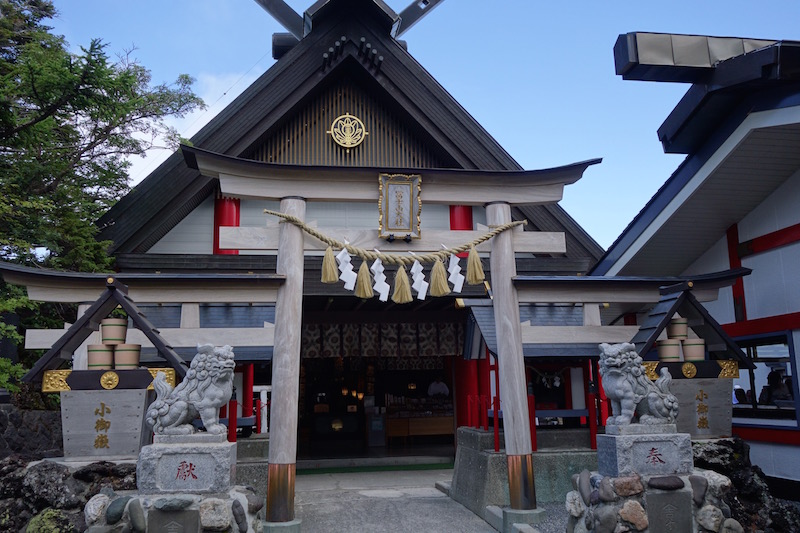
Shintō involves worship and protection of spirits in physical entities and places, i.e. rocks, trees, rivers, animals. Shrines are erected to interface with these spirits, but natural places can also be very spiritual and even contain deities. Mount Fuji, for example, is said to contain a deity, and the earliest people to climb the mountain were probably worshippers on a pilgrimage to pay their respects. Indeed, a Shintō shrine sits atop Mount Fuji — and all modern climbers must pass through one of its gates in order to reach the summit. Shrine gates are said to purify those who pass through them, so anyone entering a shrine through its gate will be purified. There's some etiquette you need to follow in order to pay your respects properly; I’ll talk about those later on in this post.

Despite being seen as a highly technologically advanced society, credit cards are generally not accepted outside of the major cities. Foreign debit cards may also be refused — especially at banks and ATMs — so the easiest way to pay for things in the country is by cash.
Japan is the only nation I've been to where the money doesn't have fractional denominations — that is to say, all prices are rounded to the nearest whole number. The coin denominations are 1, 5, 10, 50, 100, 500; notes go from 1000 to 5000 and upwards from there. Prices are usually rounded to the nearest ten, unless you’re shopping in a western-style shop where prices end in the typical 1 or 9, leaving you with loads of small change.
I’ll make a few notes here about what I’ve done in Nikkō as reference for the curious amongst you — and to also use as a reference if I ever want to remember what I did on these days in the future.
Nikkō is a mountain town in the Tochigi prefecture about 140km north of Tōkyō. It is famous for its shrines, hot springs and local wood craftsmanship. Interestingly enough, the Three Wise Monkeys (“See no evil, hear no evil, speak no evil”) originated in a shrine in this city, which I visited on Wednesday morning. The Nikkō National Park is designated a UNESCO World Heritage Site due to a combination of these attractions.
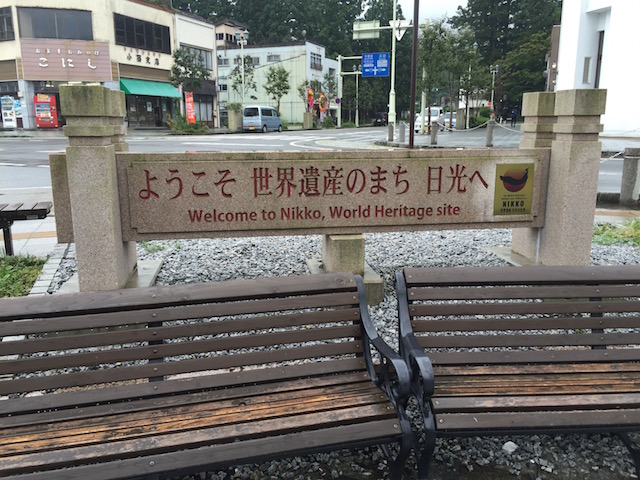
On Monday morning my parents and I boarded a local commuter train that took us from Tōkyō to Utsunomiya, and then the JR Nikkō Line from there to Nikkō station. From there, a hotel bus took us to our ryokan. A ryokan is a traditional Japanese inn, the idea of which originated in the Edo period as a sort of traveller’s inn. The rooms consist of Tatami (straw) mats, shōji doors and windows, and a small table used for eating meals which is cleared away nightly to place futons (mattresses).
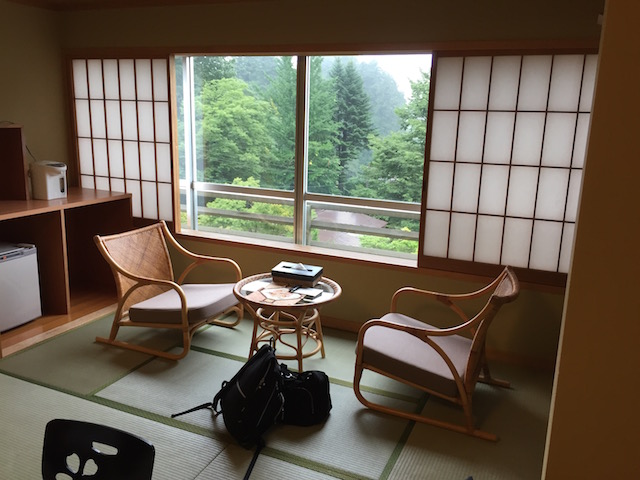
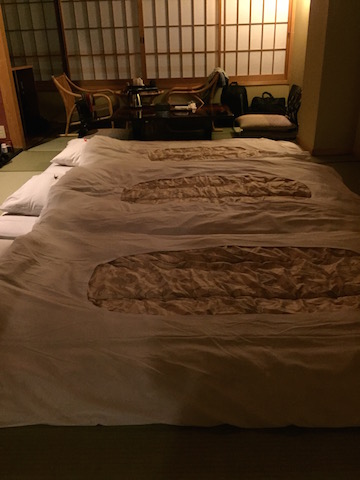
The inns generally have communal facilities and may even lend you traditional Japanese attire which you can use during your stay there — for example yukatas, which are used as casual wear and even pyjamas.

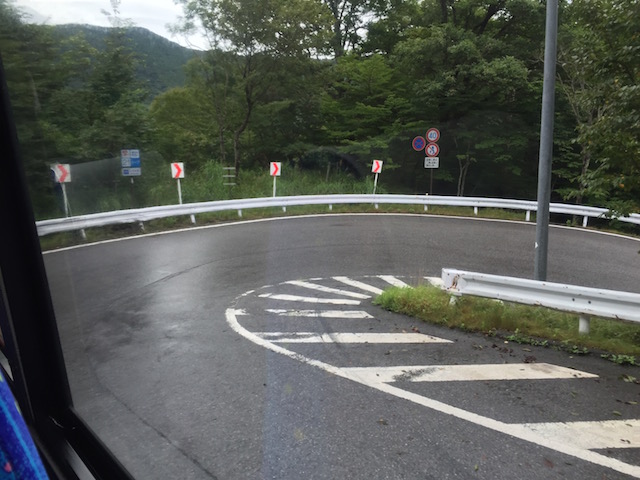
On Tuesday, we took a bus up into the mountains to visit the Kegon-no-taki falls, and the Chuzenji-ko lake. The road to the falls splits into two as you go up the mountain – one road is solely for traffic going upwards, and one solely for traffic going down. This is probably to allow faster traffic, such as cars, to be able to pass slower traffic, such as buses, without doing dangerous overtaking manoeuvres on the winding roads.
The falls themselves were as you'd expect — foaming and rumbly. There seems to be an abundance of dragonflies in Nikkō, and these swarmed around the viewing platforms – both at the top and bottom of the falls.

The Chuzenji-ko lake feeds the little stream that produces the falls, however as far as lakes go, there wasn’t much unique to it. Since it began raining quite hard at this point, we decided to retreat to the small woodwork shops along the waterfront and then make our way back down to Nikkō in a bus.
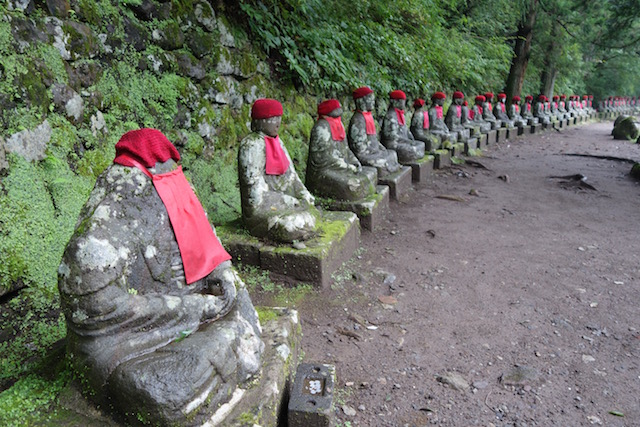
Upon returning to the main town, the rain had eased up a bit and we trekked along the Kanmangafuchi Abyss — a gorge with a fast moving river running along the bottom. A small mountain trail runs along one of the edges that brings you past the Bake Jizo (ghost jizo), a set of stone statues said to care for the deceased. They look out over the abyss into the botanical gardens over the river.
On Wednesday, we explored the shrines in the area, in particular the Tōshō-gū shrine with the 17th-century carving of the Three Wise Monkeys over a door. There is a small mountainous area containing many shrines and temples — some being restored — which can all be comfortably explored by foot. That said, if you’re planning to visit all the shrines, be prepared to climb up several steep flights of steps.
The bigger shrines (which contain the remains of several important people) require tickets to be purchased in order to visit, however there are a few which you can walk into ticketless as well.
The main Tōshō-gū shrine has three distinct areas which require separate tickets, or a single combined ticket purchased outside.
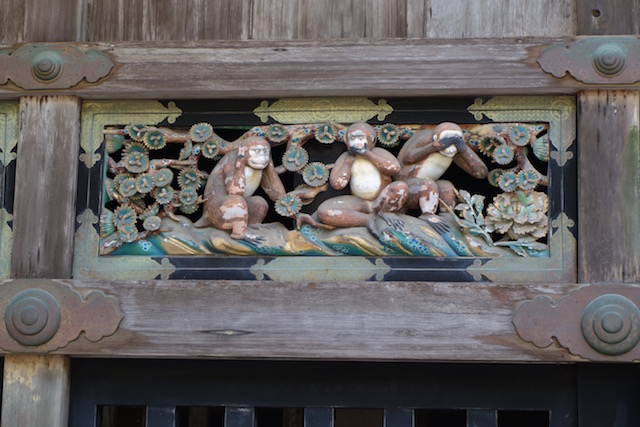
Tōshō-gū shrine is where the three wise monkeys come from — “See no evil, hear no evil, speak no evil” — and this carving can be found on a small wooden building just within the front entrance. It isn’t the biggest carving and might be missed on first sight, but the crowds of tourists taking photos of it will probably get your attention.

On the right side of the entrance, and in a separately ticketed area, there is a route up to Tokugawa Ieyasu’s mausoleum. This part of the shrine lies atop the mountain and has approximately 200-or-so steps to reach it. The gate to the steps is guarded by a small carving of a sleeping cat, which is said to have rid the area of all evil mice.
On the left side of the entrance, also in a separately ticketed area, lies the Honjido Hall, featuring a huge painting of a dragon on the ceiling. The dragon is nicknamed the “Crying Dragon” due to the way a “water droplet” sound can be heard when two pieces of wood are clapped directly under its head.
Tōshō-gū shrine stands proudly in the centre of the shrine area, and can also be visited. You must take your shoes off in order to get into the main building, but once inside you can admire the architecture and craftsmanship, as well as lots of small dragon paintings on the ceiling.

There are several other shrines in the area; some are being renovated and you can go in to see this process, others stand tall and proud welcoming visitors and followers alike.
Any person is welcome to visit a Shintō shrine; doing so is called Omairi. If you want to pay your respects, there are a few steps to follow:
- When at an entrance gate, bow respectfully before going through.
- Perform Temizu (outlined below) if there is a provided water basin.
- If there’s a donation box, you can drop a small donation in the box. If there’s a bell, you might be able to ring it gently to notify the spirits of your presence.
- At the shrine (or after donating or ringing the bell) bow, clap your hands twice, keep them in a prayer gesture while saying a prayer and finally bow again.
As per Wikipedia, Temizu is as follows:
Take the dipper in your right hand and scoop up water. Pour some onto your left hand, then transfer the dipper to your left hand and pour some onto your right hand. Transfer the dipper to your right hand again, cup your left palm, and pour water into it, from which you will take the water into your mouth (never drink directly from the dipper), silently swish it around in your mouth (do not drink), then quietly spit it out into your cupped left hand (not into the reservoir). Then, holding the handle of the dipper in both hands, turn it vertically so that the remaining water washes over the handle. Then replace it where you found it.
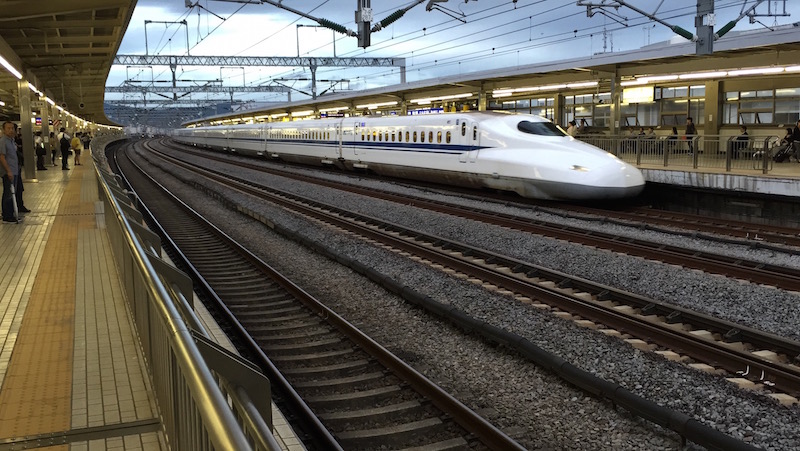
On Thursday, my parents and I will be taking a bullet train to Kyoto, where we will be staying for a few days. I’ll have a better connection there, in the evenings at least, so I should be able to keep everyone more up-to-date.





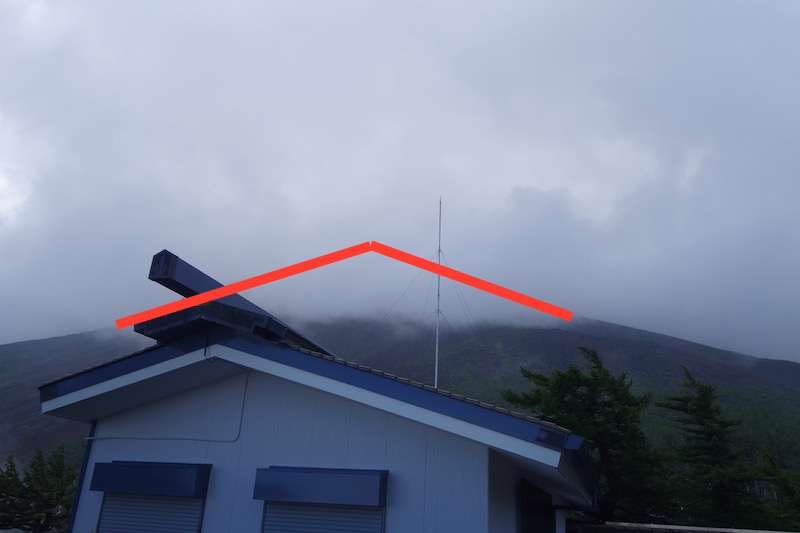
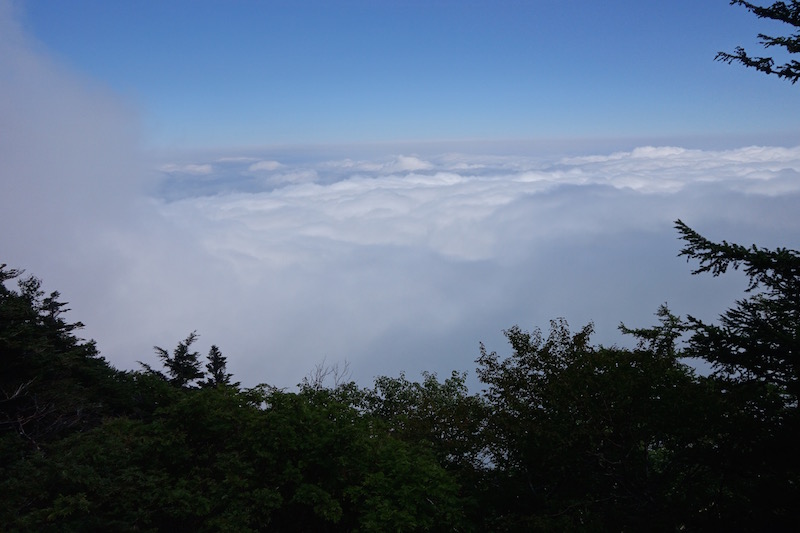



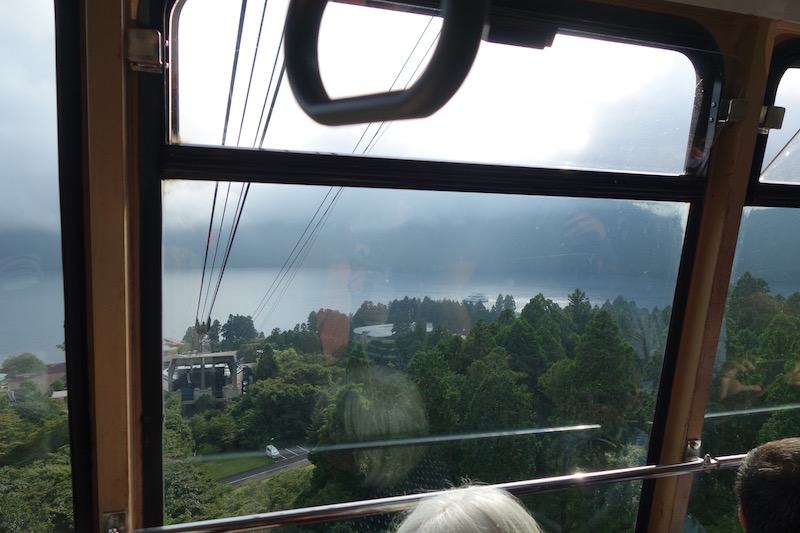
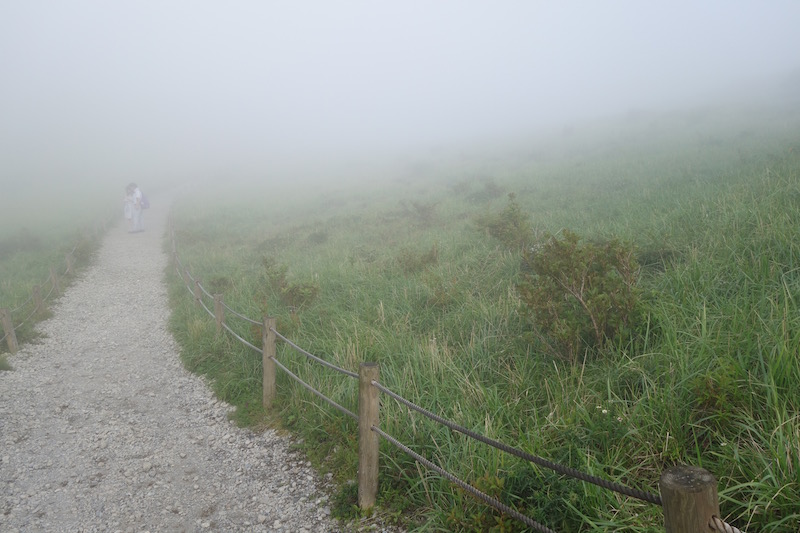 There was a chance to ascend to one of the tops of the interior volcanic domes on the Hakone-en cable car, so the tour guide led us there. We ascended into the clouds in the small and exceedingly crowded gondola. The clouds decided not to clear — this seems to have been the order of the day — and we couldn’t see anything at all, so the group decided to return to the base of the mountain to browse the heinously overpriced gift shop before boarding the coach for the last time that day.