This content was posted over 2 years ago and is most likely no longer
relevant.
When the sun burns out we’ll light the world with tiny glowing screens.
We live in an increasingly connected world, surrounded by tiny glowing screens, all endlessly vying for our attention. TVs, showing us the latest reality shows about famous people doing yet another hapless task; smartphones, delivering us endless feeds of news from people we vaguely care about; tablets, allowing us to respond to e-mails whilst sitting on the toilet; computers, connecting us to the internet - arguably the single biggest source of connection and procrastination there is out there.
And yet, despite all this, I regularly meet people who feel alone and isolated.
When you look at it, we humans are weird. “How can one be so connected with everything yet feel so disconnected?”
I’m painfully aware that I’m being somewhat hypocritical keeping you here, staring at your tiny glowing screen as yet another notification pops up reminding you that that conversation you’ve ignored for the past two minutes is still going on. But that’s a reason why I’m glad you’re here. The fact you are means that you’re taking a break from those endless feeds of information or the constant pinging of notifications. Hello! Take a deep breath; that message can wait.
I’m guilty of having been addicted to my smartphone. At one stage, I used to call it “my lifeline” — a somewhat ironic façade of being connected to people I thought were interested, whilst actively ignoring those people right beside me who actually cared. I lived in my own little world; surrounded by little numbers in blobs and text in bubbles. It took me a while, but I recognised that this was an awful way to spend my time. I lived for the hollow feeling of productivity I got when I answered an email with “Sent from my iPhone” and a false feeling of connection when I swiped down another screen of photos from that person I used to go to school with but can’t remember their name. I know it sounds cynical and a bit dystopian, but oftentimes it was true.
Our time and attention are the two most important things we take for granted.
Let’s be honest here. I’m pretty sure being that connected doesn’t make anyone happy. Over the past two years, I’ve been closing down my social media accounts as I’ve realised that the people I honestly want to spend time with are the people who contact me directly and invite me down to the pub — not the ones who Like photos I post to Facebook. And so I’ve made the conscious decision to Go Light.
Intentionally disconnecting has given me a lot of time to think about things. Some of these things are pretty obvious; others not so. Going forward I’ve decided that I will share this journey; where I’ve come from, what I’ve learnt so far and where I hope to go. Feel free to pop back on your own volition.
Going back to the start
This content was posted over 2 years ago and is most likely no longer
relevant.
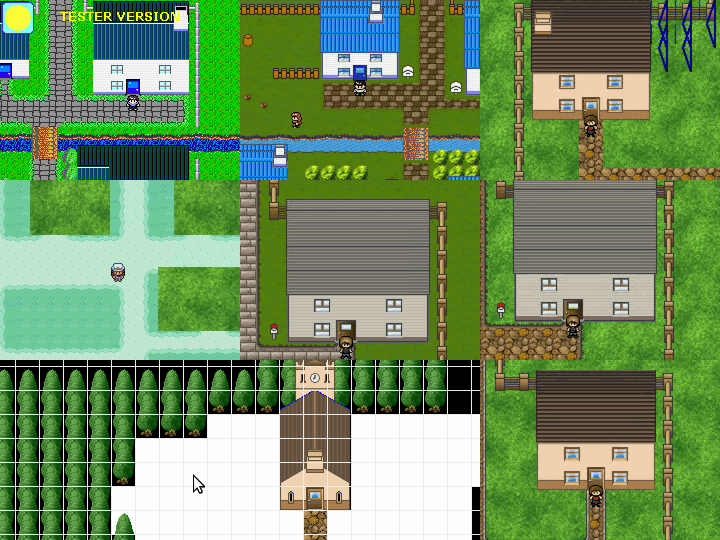
I have an unhealthy obsession with a particular set of game project files on my computer.
Almost once a year, for the last fifteen years, I have opened up a text editor or development environment and loaded this project—which can only be described as my guilty pleasure. I’ll add a few small features to it or tweak the layout of the levels, save the files and then close it again to leave it to rot for another few months. If I’m feeling smart, I might rename the project to reflect its state but it honestly never gets much further than that.
Project Vestige – what it’s called this iteration – is what I refer to as my Forever Project: something that I’ve started, have never really put down but that also never really gets anywhere.
Vestige | ˈvɛstɪdʒ |
A trace or remnant of something that is disappearing or no longer exists
It seems fitting that I renamed the project “Vestige” back in 2015 – perhaps as a lighthearted nod towards the way this project has been kept on life support far beyond what anyone would have thought was sensible. The game style it is modelled after stopped being popular a long while back and technology has moved on so far since then that it’s not really that much of a challenge to do the things that were problems back when the project first took off.
Anyway, enough reminiscing.
Earlier in the month, I decided to try something new when it comes to the code. I reactivated the source code repository for the project, took a brief look at everything there and then I did what I should have done a few years back. I obliterated it.
Normally, that’s where the story would end. However, I’d not be writing this post if that was the case.
Vestige was started back in 2004 – at least, that’s the earliest copy of it I can find – and has pretty much become part of me since then. At one stage, the underlying code was complete and it was just looking for a storyline, however I’d just gone to university and learnt how to program properly. The code has been in a constant state of flux since then. Three of the characters that I use in original artworks on this site have all come from one of the many iterations of the story: Sandy, Paige and the more recent Skye are all pretty much the same character but after the game world was overhauled yet another time.
So as I hovered my mouse over the delete button, a different set of thoughts struck me. What if I wipe everything and just start again? I could just toss the excess baggage that I associate with this project and begin afresh.
So that’s what I did.
I have no idea what the future holds for Project Vestige this time round: it could simply disappear back into the realms of forgotten and corrupted data, or I could actually keep the motivation level up to build something interesting. I’d like to break the mould and turn this into something worthwhile this time around and prove to myself that I am better than I was last time I tried. It’s a big ask but after fifteen years it would be a little sad to just give up on it. Sure, there’s no code left over from the last iteration this time around, but that actually means there’s nothing holding the project back when it comes to building it.
And hey, we might even get into a situation where the three iterations of the same character get to meet each other. Who doesn’t want to see that?
This content was posted over 2 years ago and is most likely no longer
relevant.
I am exceedingly fortunate to have had the chance to travel to both Singapore and Japan over the last three weeks. I want to thank my parents and my manager(s) for enabling me to do this; without them it probably wouldn't have happened.
If you want to view all the posts I've written regarding this trip, you can load the #Japan2015 tag; if you’re already reading from that tag, remember that the posts are in reverse chronological order — that is to say, newest to oldest.
Today marks the beginning of a new work week — I’m glad I’ve had the chance to experience the country and hope to return there in the future.
After all, I still need to get my Thunder badge.
Kyōto
This content was posted over 2 years ago and is most likely no longer
relevant.
Tōkyō is cramped for space — and you can tell this with the packed together buildings, multiple-layer expressways which are built atop rivers and canals, and the tiny little cube vehicles that seem to be really popular in the middle of the city. Rush hour traffic is more akin to a sea of people flowing down the streets into shops and subway stations alike.
A view of one of the waterways in Kyōto, showing the less cramped nature of the city
Kyōto, however, feels completely different.
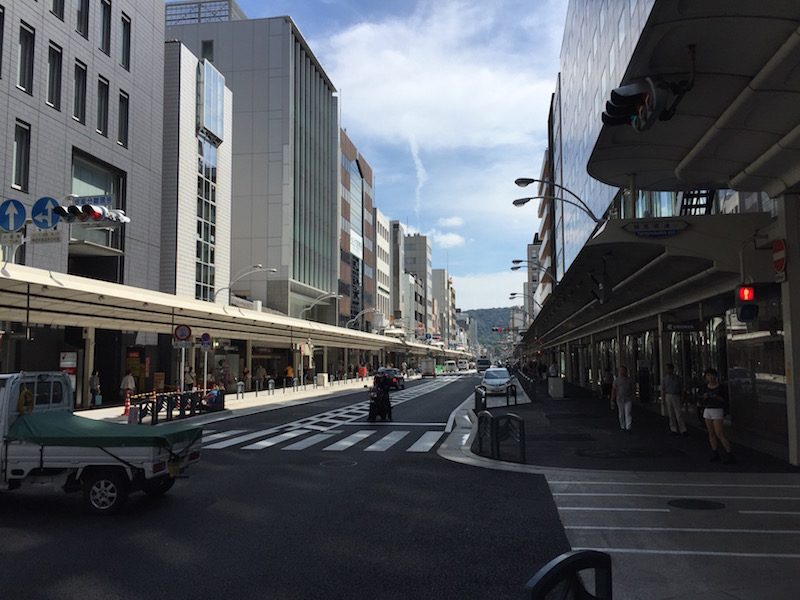
Kyōto is the old capital of Japan — the Emperor's family lived here between 794 and 1868 — and it definitely has a more traditional feel to it than some of the other places I’ve been while here. That said, Kyōto doesn't really feel Japanese at all, when you’re standing in the major shopping precincts around the central station. The major streets in the centre are lined with boulangeries, patisseries, supermarkets and coffee shops emblazoned with western names. It feels more like someone plucked an area out of Paris or New York, and mixed it in with a bit of Japanese culture — so much so that if you had been randomly teleported to the centre, the only way you could tell this was a Japanese city is the way there's the occasional shop selling novelty tourist merchandise, the lines of vending machines, and the traffic signals.
Before I continue, let me speak a bit about the latter two from that list.
Vending machines such as these are common in Japan
Vending machines are all over the place in Japan. They’re a quick and incredibly convenient way of purchasing a whole variety of goods, including drinks, flowers, cigarettes and instant noodles — and, according to the official Japan Guide there’s approximately 5.52 million of them, raking in about 6.95 trillion yen annually. Drinks vending machines are the most common, being found on almost every other street corner, park, station or middle of nowhere with a lamp post. The ones I’ve seen stock iced teas and coffees, energy drinks, Pocari sweat[1] and other assorted soft drinks. Some are even dedicated to beers — something that is unimaginable in places like the UK. They all look identical, save for the markings and company logos on their sides, and the prices for items within them are usually pretty consistent.
While there have been instances of vandalised machines, the low crime rate in Japan means that vending machines live long, healthy lives and can be quite “technologically advanced” compared to the ones we see in the west. These machines are so ingrained into Japanese culture that most people living there don’t question why there are so many of them; they question why other countries don’t have as many as Japan.
Traffic lights are horizontal, compared to the vertical ones we have in the UK
Traffic signals in Japan are horizontal compared to the UK’s vertical layout. They’re also marked on Google maps for some reason, but they’re generally found at every major intersection in a city. Pedestrian crossings can usually be found at every light, as well as crossing some smaller intersections which don't have lights or much traffic — turning traffic must give way to pedestrians if the green man is shown, leading to weird tailbacks in rush hour.
Pedestrian crossings are usually accompanied with a loud crossing siren. These come in two sounds which were pretty standard in the cities I visited, so north-south and east-west signals on the same intersection sound different. One sounds like a 7-11 “customer entered” sound – a sort of “bing-bong” – and the other one is an electrical “chirp” sound.
Anyway. Back to Kyōto.
A shopping street near the centre
The hotel I stayed at in Kyōto, the Gran Ms Hotel, is situated right in the middle of what seems to be a shopping district. The streets around it are wide with plenty of places to park and the pavements covered with permanent canopies that gently play obnoxious “muzak” as people bustle along them.
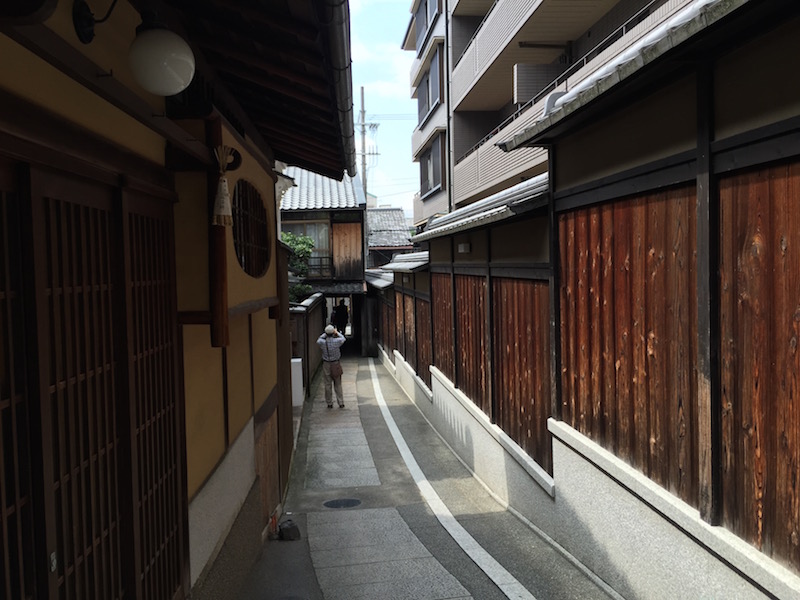
Take one of the side streets away from these main shopping streets, however, and you’re transported to a much more rustic city. The busy hustle of the high streets dies down to a gentle rumble and small Japanese-style buildings line the backstreets — some even with traditional wooden façades. It’s easy to get lost down these little streets, as Kyōto’s heart is based on a grid layout, and they all seem to be pretty sameish.
The back streets of the city feel like a trip back in time
Kyōto has a plethora of famous shrines scattered around it; the most notable of them being Kinkakuji (the golden pavilion) – and its spiritual successor Ginkakuji (silver pavilion) — the Daisen-in (and others in that area) which is known for its Zen rock gardens, and the Fushimi Inari Shrine — the fox shrine — which has Torii gate tunnels snaking through the mountainous forests. The area around Kyōto is famous too: Kobe (famous for its beef steaks), Nara and Osaka are easily reachable by train and offer further endless day trips if you ever get bored of Kyoto.
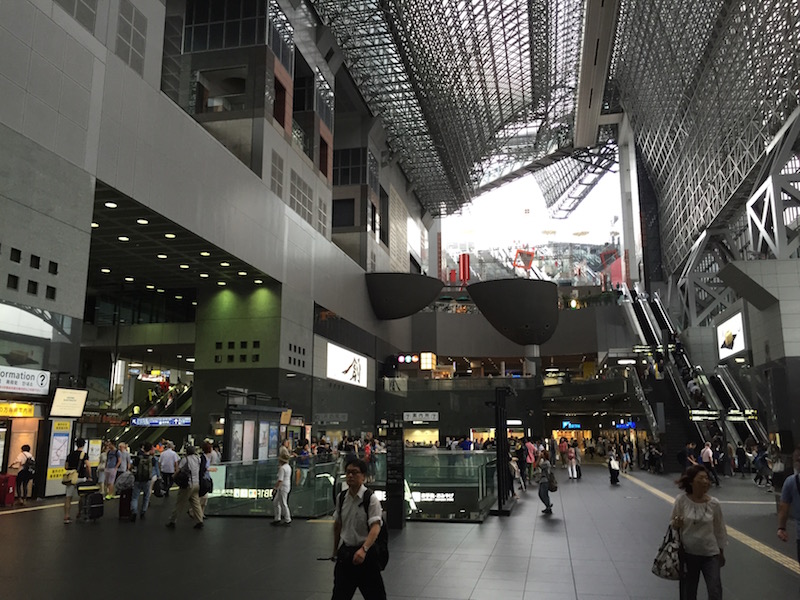
When you first arrive into Kyōto by train, you’ll enter the ridiculous rail station. This structure is 15 floors high and is packed with shops (the two basement floors are shopping malls!) entertainment venues, cinemas, offices etc etc. The first three floors are the station platform floors, as you go up there appears to be floors of restaurants and the weird skeletal structure that makes up (or possibly “holds up”) the roof.
The main station, with its abstract roof
Outside of the station stands the Kyōto tower. I didn’t personally visit this — in fact, I didn’t even see it due to travelling away from the station when I arrived in a small taxi in rush hour, and using the subway system when I returned to Tokyo.
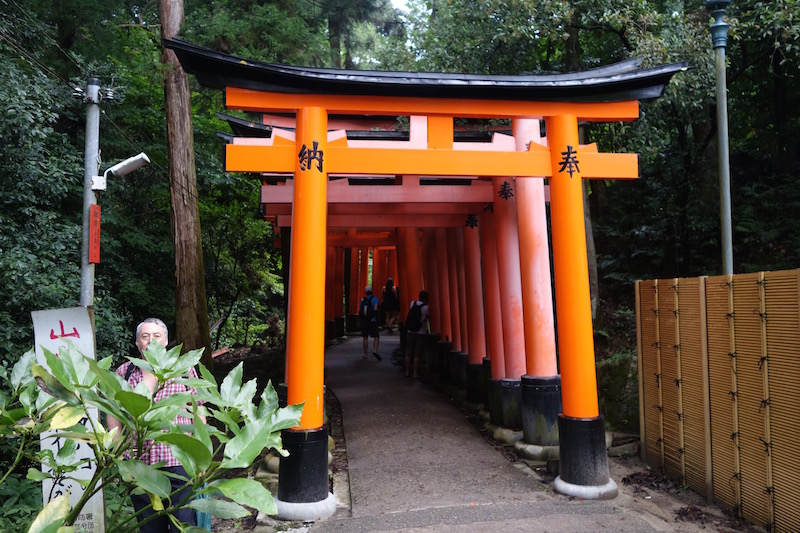
During my first day in Kyoto, my parents and I visited the Fushimi Inari Shrine — a shrine dedicated to Inari, the Shintō god of rice. This shrine is known as “the fox shrine” as Inari’s messengers are supposedly foxes. It stands atop the sacred Mount Inari, and is famous for its thousands of torii gates, which build tunnels that snake up the hillside. The top of mountain is at 233 metres and can be visited by walking along the torii gate pathways.
The tunnels of Torii gates found snaking up the hillsides near the Fushimi Inari Shrine
I didn’t climb all the way to the top when I visited, due to the huge amounts of people there and the excessively hot weather which brought us to a standstill about ⅔ of the way up. Instead of going to the top, we instead made our way back downhill and took a train to the Higashiyama district.
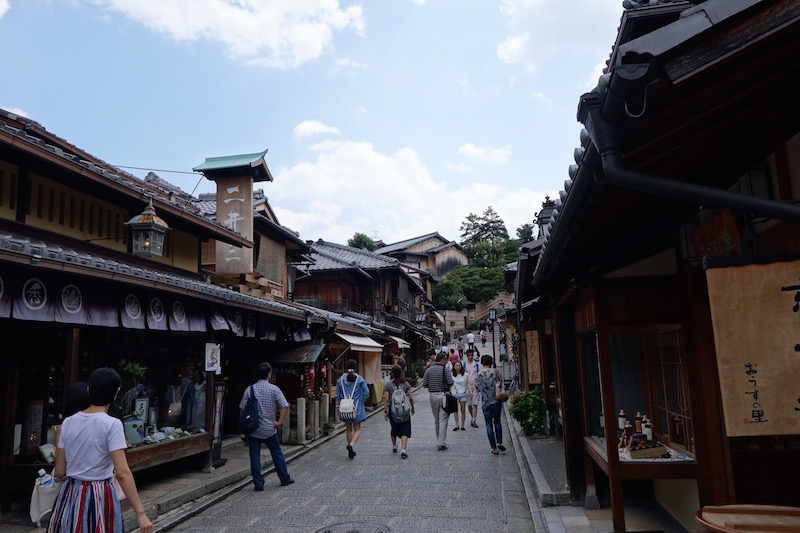
Higashiyama district is one of the city’s best preserved historic districts, and looks very much like “old Kyōto” — narrow alleyways, wooden buildings and traditional-style shops selling handicrafts and souvenirs. Renovation is also currently underway to remove or hide modern structures, such as telephone poles, and repave the streets in a more traditional style.
Views of the historic Higashiyama district
The district is located along the slopes of Kyōto’s eastern mountains, and it seems that the higher you get, the more traditional it feels. The main part of the district is a short, approximately 2 kilometre walk between the Yasaka and Kiyomizudera shrines.
On the second day we were in Kyōto, we continued our shrine-hopping tour. The first one visited was Kinkakuji, or the Golden Pavilion.
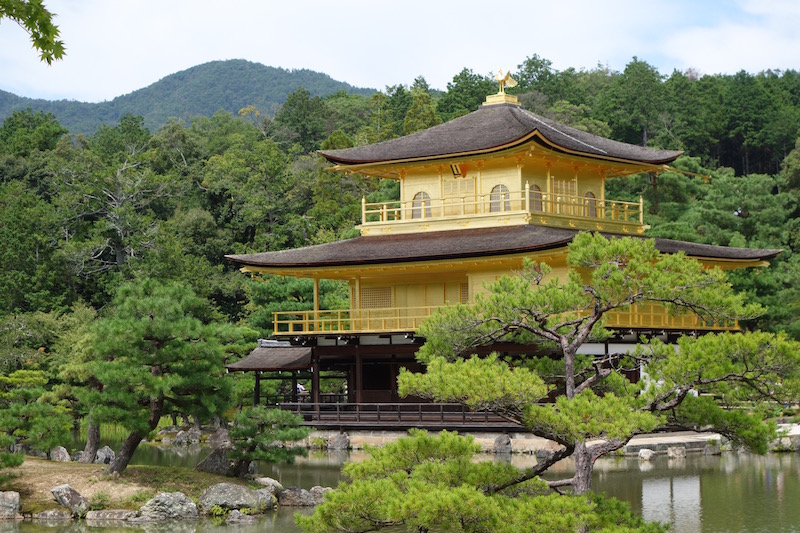
The Golden Pavilion sits in beautifully maintained gardens
Kinkakuji is the only remaining building in the retirement complex of the shogun Ashikaga Yoshimitsu. It has burnt down several times in during existence — both by accident and on purpose. The upper two floors are gilded in gold leaf, the bottom floor uses the traditional wood and plaster walls. Each floor of the pavilion is styled with a different architecture: the ground floor is built in Shinden style, more commonly used for palaces; the first floor is built in Bukke style that was traditionally used for samurai residences; the top floor is built in the style of a Chinese Zen hall — and is apparently gilded inside as well as out.
The pavilion is probably one of the most famous tourist attractions in the area, regularly appearing in pop culture such as anime. Here's a frame from the anime K-On!! which aired a few years ago:
The Golden Pavilion appears in the anime *K-On!!*
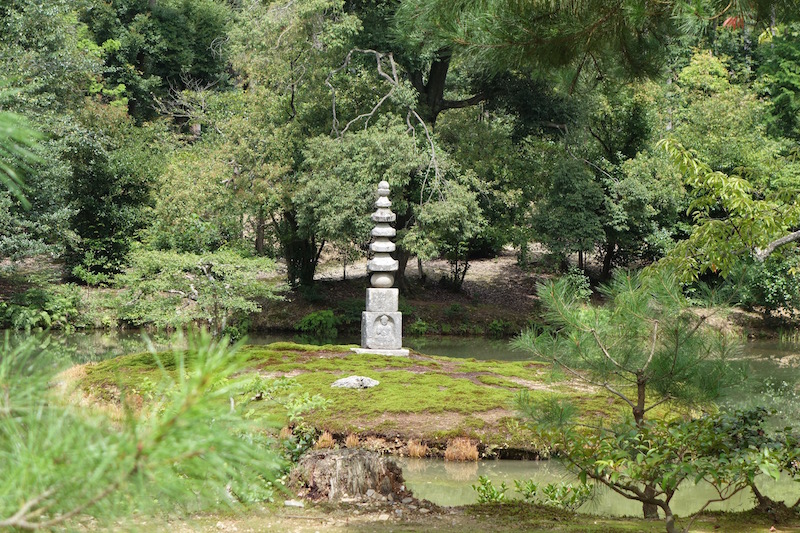
The gardens around the pavilion are very pleasant and there is a route that you can take to explore them. If you don’t mind being pushed around by other tourists, you can follow this route to the main part of the shrine behind (and slightly above) the pavilion. There's a few interesting features, such as the traditional tea houses and coin toss, which will catch your eye as you walk around.
Statues in the grounds
After Kinkakuji, we walked to the Daisen-In temple. This temple is famed for its legendary Zen rock gardens — although, it’s a lot better to visit it in person than to read about it.
Daisen-In's entrance; cameras are not allowed inside
Cameras are not allowed within the temple, so I can’t upload a photo to show you. The area around it has several other temples with competing Zen gardens, all part of the same parent temple, Daitoku-ji. If you’re ever in the area, visiting at least one is a must, however Daisen-In is one of the quieter ones and you may even get guided around it by one of the monks.
From Daisen-In, we trekked to the Kyōto Imperial Palace park, stopping briefly in the Nishijin Textile Centre. This was more of a huge shop, so we moved on quickly.
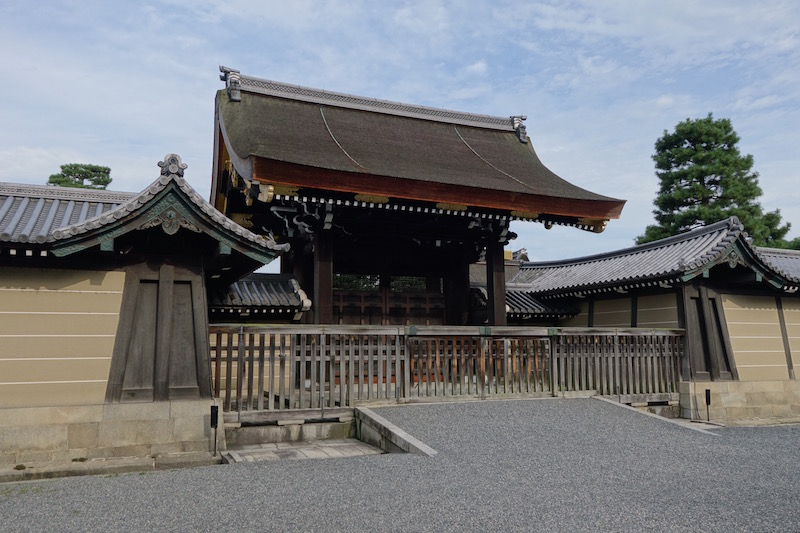
Gates seen within the Imperial Palace park
As with all parks in Japan’s cities, the Imperial Palace park offers a break from the hectic bustle of the outside city life and you can find locals and foreigners alike strolling through it. While the emperor lives in the Tōkyō palace, the Kyōto Imperial Palace stands in this park — albeit significantly smaller than the original one from when Kyōto was the capital, as that palace was moved around the city plenty of times and eventually burnt down. The current one was built in 1855 and you need a permit from the emperor in order to visit.
Ginkakuji, the Silver Pavilion
The third day was marred with rainfall. We visited the Silver Pavilion, Ginkakuji, which boasts both Zen and moss gardens, but a more traditional style pavilion — which, despite its name, has no silver gilding. Shogun Ashikaga Yoshimasa, Ashikaga Yoshimitsu’s grandson, built this pavilion in the style of Kinkakuji. Since the shogun was a fan of art, the Silver Pavilion became a centre for arts and culture.
Leading from Ginkakuji is a canal side walk, famous for its cherry blossoms in spring, called the Philosopher’s Path. The path is named this after one of Japan’s most famous philosophers, Nishida Kitaro, used to walk this route while meditating on his way to the Kyōto university. On the way back from the Philosopher’s Path, we stopped at the Kyōto Handicraft Centre — also a big shop, however unlike Nishijin it actually contained locally-produced items at reasonable prices. I picked up a small wooden box and some gifts for my colleagues back home.
The final day we spent in Kyōto we spent time in the botanical gardens and browsing the shopping district around the hotel. The botanical gardens were nice, however since it was early autumn, most of the flowering plants were not in bloom. There’s an interesting observatory which includes a night garden and some odd modern art outside the building, however as far as botanical gardens go, once you’ve visited one, you've probably visited them all — and I’ve been to many.
Kyōto is a great place, and it definitely feels different from Tōkyō — in fact, each city I visited in Japan has its own unique character and culture. I would like to return in the future to see the Philosopher’s Path in bloom, as well as visit the surrounding cities. Unfortunately, this time I’d run out of time — adding yet more things to my Japan to do list.
[1] Pocari sweat is a “Ion supply” sports drink.
On the train again
This content was posted over 2 years ago and is most likely no longer
relevant.
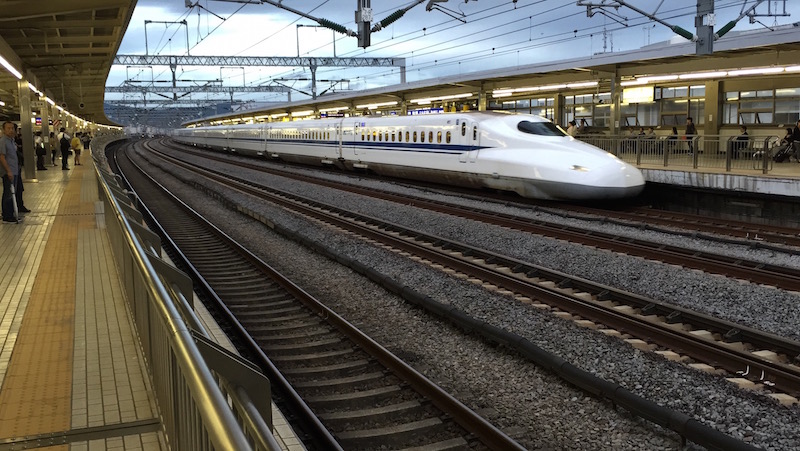
Bullet trains are pretty cool.
You’re sitting in your seat bumbling along at the speed of a normal train through built up areas, and then you feel a slight nudge and hear a small whir as you move into a less crowded area. Before you know it, you’re moving at a ridiculous speed and everything out the window is a blur of colour.
The interior of a bullet train resembles an aircraft, except you have a small football pitch of leg room and the windows are bigger. Otherwise, your seat reclines like a plane, you have window shades and tray tables, seat pockets and announcements from your pilot or cabin crew. There's even a trolley service which resembles one from a flight. Trains are not rotated at the terminus — instead, each of the seats in a carriage are manually rotated 180º when the cleaning staff pass them.
There’s an odd custom I’ve noticed when you’re using public transport in Japan. The PA systems and notices within the vehicles all prominently display the following message: Please switch your mobile phone to silent mode and refrain from making phone calls while on the vehicle. I think this is a great idea. If we had that rule in the UK, buses and trains would be a much more comfortable place to be. Unfortunately, it could never work — especially with the chavs claiming their deity-given right to loud and obnoxious music blaring from tin can speakers.
Trains always stop at the same point on every station. Platforms have queue lines painted on them where doors will be, and stations with faster trains (i.e. the Shinkansen) have gates that open when you're allowed to climb aboard. Most stations provide step-free access from concourse to train seat. Trains are the primary means of transport in bigger cities — such as Tokyo — where owning a car is pretty much impossible.
All the trains I’ve been in within this country are very traditional, despite the hugely futuristic gate systems for entering them. All train lines in Japan are electrified; all commuter trains are electric and very quiet. The train pilot sits in front and their sole responsibility is to control the throttle. The conductor sits in the back of the train, and reads the non-automated announcements, controls the doors, and presses the button to control the piece of music played at the platform when the train has arrived. All train staff wear an immaculate uniform and very much look like they’re off to a job interview.
The conductor has a very artistic ritual when a train arrives into a station, involving multiple over-the-top hand gestures (pointing at doors, buttons, and in the direction the train will move) — it almost seems as if it’s all audited and kept track of. It’s actually supposed to help keep the conductors (and drivers) mentally alert — heightening mental focus at key points on the job where accidents are likely to occur. (As a side note, you can read more about this here and here).
Japan railway services are the most punctual in the world. The average delay on the Tōkaidō Shinkansen in fiscal 2012 was only 0.6 minutes. If a train is a few minutes late, the conductor will make an announcement over the PA system, profoundly apologising for the delay. Any longer than five minutes and the train company will offer a “delay certificate” (Wikipedia reference) because nobody in this country expects you to be delayed by a train. Imagine First Great Western in the UK doing this — they'd go bankrupt within the hour.
Of course, all this positivity wouldn't be without its downsides. An increasingly common practise for train companies is to provide female-only carriages during rush hours, due to the increasing number of sexual harassment crimes taking place on the railways. Trains are also used as a means to commit suicide in the country — Japan unfortunately suffers from a very high suicide rate. Platform edge doors are becoming more common to prevent people jumping, and various other countermeasures have been put in place by the railway companies.
Still, Japan’s railway systems are a marvel to behold; and an example that the UK’s shoddy railway system can only aspire to be.