Fuji-san and Hakone
The Japanese language is rather pleasant to listen to when people are speaking it around Tōkyō. The language is calm and almost “bubbles” over you as people around you speak it or when it comes through the PA systems in public places, such as airports or train stations. According to the 2007 Insight Guides guidebook of Japan, both genders generally tend to skew their voices to be deliberately appealing to the other sex; men pushing their voices theatrically low, and women using a high pitch which is supposed to come across as attractive. It's not entirely obvious as a westerner, but it can be interesting listening to the Japanese speaking to each other in Japanese and then switching to English to speak to a foreigner. The change in pitch is subtle, but can be apparent.
A lot of things in Tōkyō (and the rest of Japan, it seems looking back at the end of the holiday) are “enhanced” with sound. Many items are personified and will talk to you: buses will announce their arrival and departure in the same way that lifts will back in the UK; escalators will politely tell you you’re reaching the top. If you’ve (accidentally) pressed the “elderly or disabled” button on road crossing signals, the lights will tell you when to start walking. Trains will apologise to you for being late, tell you the next station and which side the doors will open on. These prompts may be backed up with quick audio jingles or music. JR stations in Tōkyō all seem to have a unique few seconds of music they play when a train pulls in — so if you missed the announcement in the train, just listen for the two-or-so seconds of music that play as the doors open. If it sounds like your station, you probably ought to start making your way off the train.
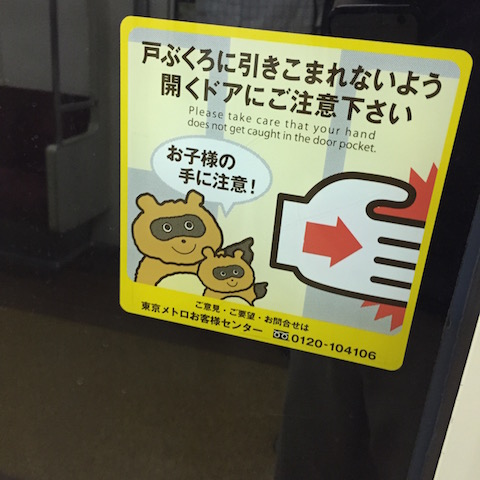
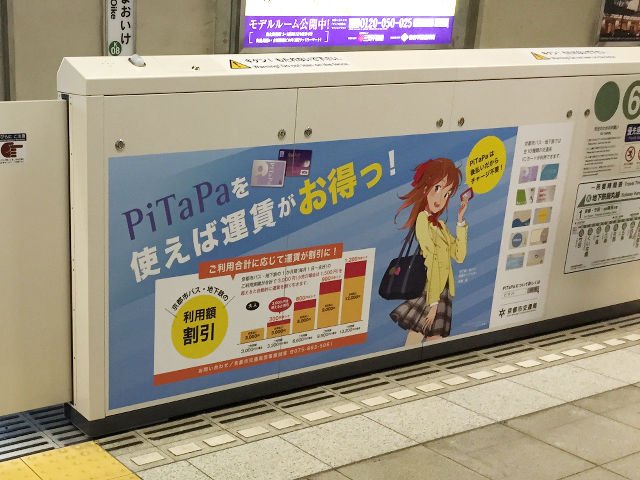
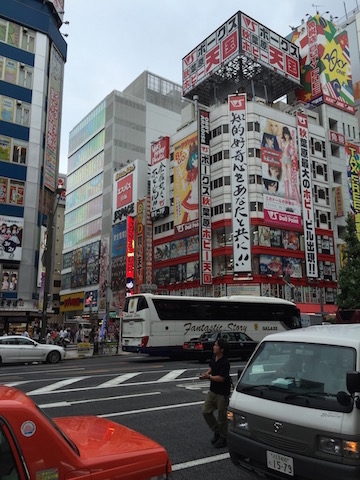
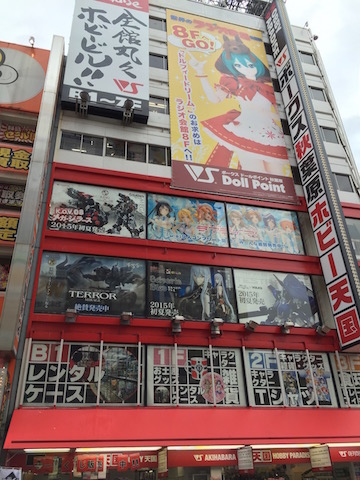
Quite a few places and companies also employ visual mascots on their signs and packaging that is also personified. You’ll notice cartoon cars with smiley faces in adverts, or winking trains on station signs, little firemen on a fire hydrant — and, with the manga and anime culture over here, if a company has enough money, you might see the season’s latest and most popular animated characters holding up the product on a poster. A ringing endorsement from everyone's favourite animated schoolkid-warrior-space pirate.
Just a few minor things I’ve noticed while over here, anyway.

After the unstructured hubbub of yesterday, my parents and I decided to go on a day tour of the volcanoes of Mount Fuji and Hakone. We all bundled onto a coach at 9:07am — a slightly less-than-punctual start for a tour scheduled for 9am sharp — and rumbled off down the Chūō expressway inland towards Mount Fuji. The weather didn’t start off very promising with a low, thick cloud cover, and it only seemed to get worse during our journey westwards. There was a point where it was bucketing down with rain, but the tour guide optimistically maintained that there was a 50% chance that we would still be able to see the peak of Mount Fuji, due to the way mountainous areas can have different micro-climates.

As we turned off the expressway and onto a smaller road at the town of Fujiyoshida, the clouds did begin to clear and sunlight shone through. However, the mountain was shrouded in a deep set of clouds which offered us only a glimpse of the base of it. As the bus ascended upwards to Fuji station 5, we entered the clouds and there was a brief moment of hope that we’d come out above them; sadly, this was not the case and we were left only with photos of clouds shrouding the summit, and blanketing the lands below. While disappointing, it was still quite the experience and the cloud blanket was definitely a spectacular sight.
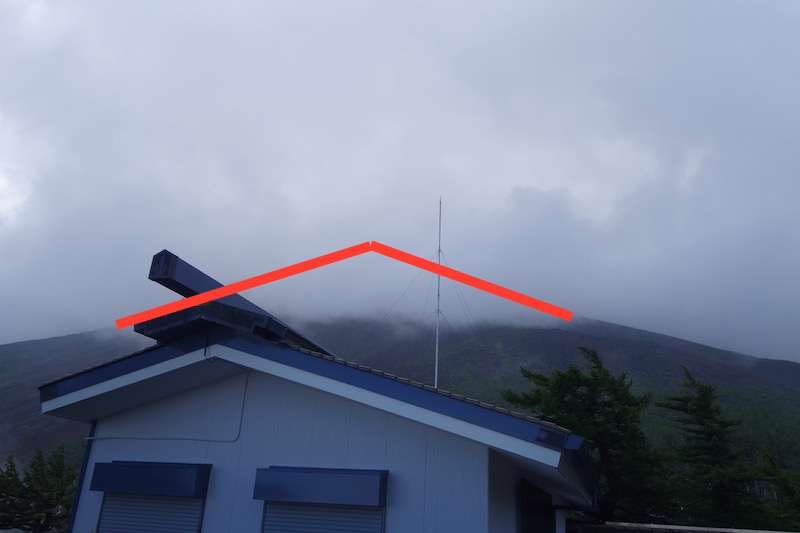
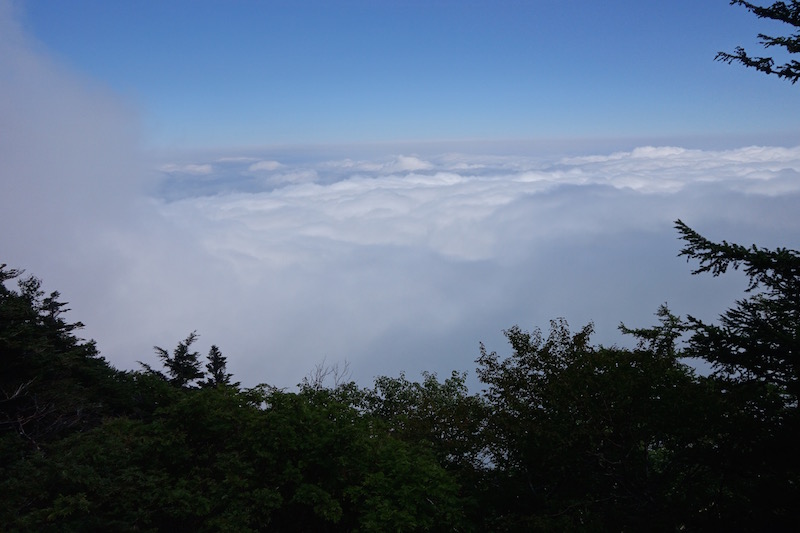
Mount Fuji is an interesting volcano, and is relatively “new” in relation to others. The volcano has consumed other mountains during its time — a point the tour guide helped explain with her beautifully hand-drawn illustrations and hand-crafted paper models, which delighted the entire tour. Fuji itself is an almost perfect cone — the only major irregularities are caused by the edges of the other mountains sticking out of it — and this is one of the reasons why it is so famous.

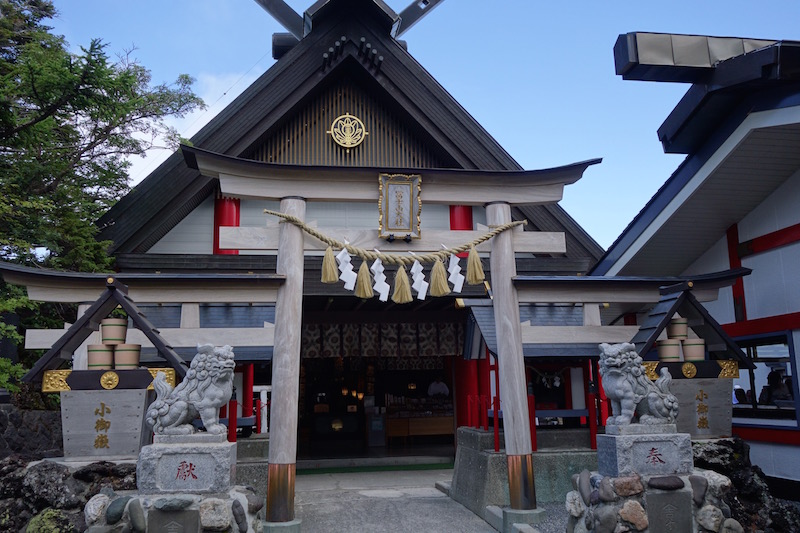
Station 5 is about half-way up Fuji and sits atop one of the mountains which was consumed. It has a small but well-maintained Shintō shrine there, along with a set of tourist shops, and is generally where most climbers start their Fuji climbing experience. While I didn’t climb this time round, perhaps I will during my next visit.
After the brief stop upon Fuji, the coach rattled its way back down the winding Fuji road and off towards the Mount Hakone caldera — which, explained with the help of the fun illustrations and explanation given by the tour guide, had been created by a series of huge eruptions many years ago, that caused the majority of the top of the volcano to collapse. Mount Hakone is made of two huge calderas, and is still active — evidenced by the ongoing eruption and evacuation orders for parts of the caldera.

Lake Ashi (also known as Ashino-ko) is a commercially-exploited tourist destination which the tour went to once within the caldera. A company provides “pirate ship sightseeing tours” from the northern edge of the lake to the south-eastern edge and points out one or two major points of interest along the way. I wasn’t very impressed by this portion of the tour, especially as every one of the “major sightseeing points” was on the left-hand side of the boat, and that there were only three of these points brought up over the PA system in a ridiculously slow and drawn-out American voice, but I guess they were trying and I give them credit for that.

The boats themselves were horrible caricatures of pirate ships, with full masts and rigging, blackening paint on their sides, ends of cannons sticking out of red wooden walls and a complete plastic crew on the upper deck. Additionally, a small Japanese man with a fake beard and belly who claimed to be the “captain” tried to sell people photo opportunities with a real “pirate” as the actual crew slaved away on the bridge down below, skilfully keeping the diesel engine quiet as we avoided fishing boats and Shintō shrine gates upon the smooth lake waters.
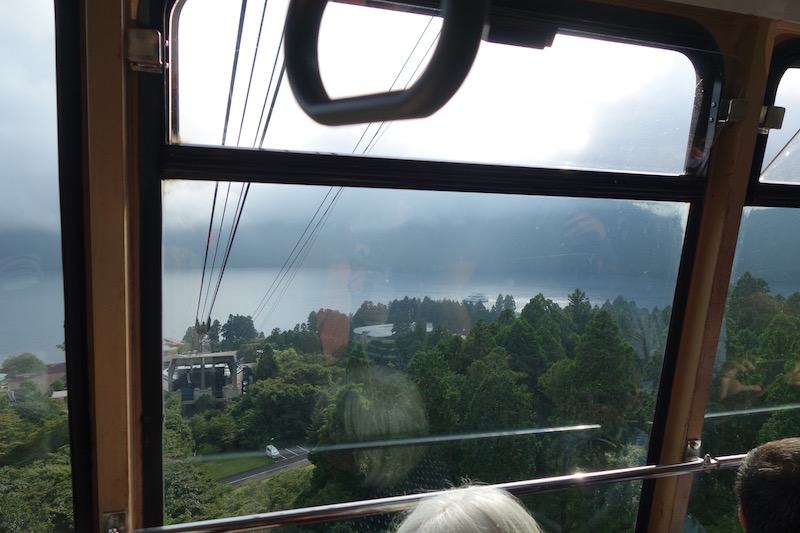
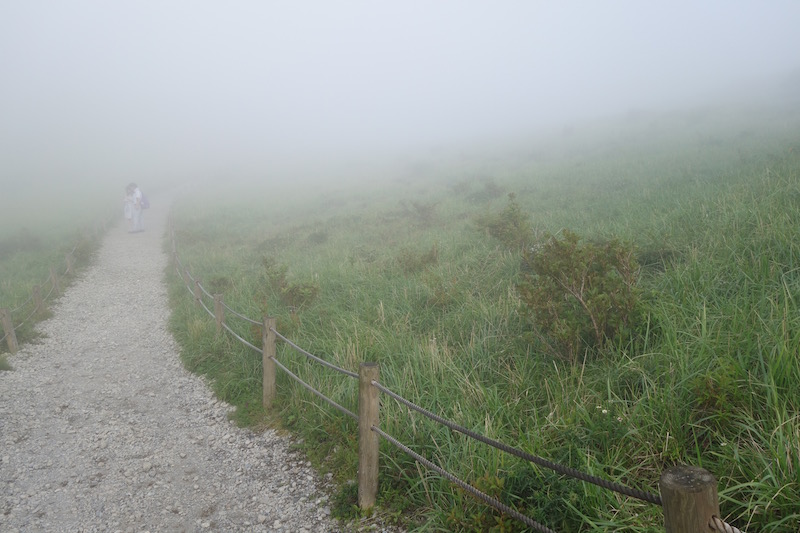 There was a chance to ascend to one of the tops of the interior volcanic domes on the Hakone-en cable car, so the tour guide led us there. We ascended into the clouds in the small and exceedingly crowded gondola. The clouds decided not to clear — this seems to have been the order of the day — and we couldn’t see anything at all, so the group decided to return to the base of the mountain to browse the heinously overpriced gift shop before boarding the coach for the last time that day.